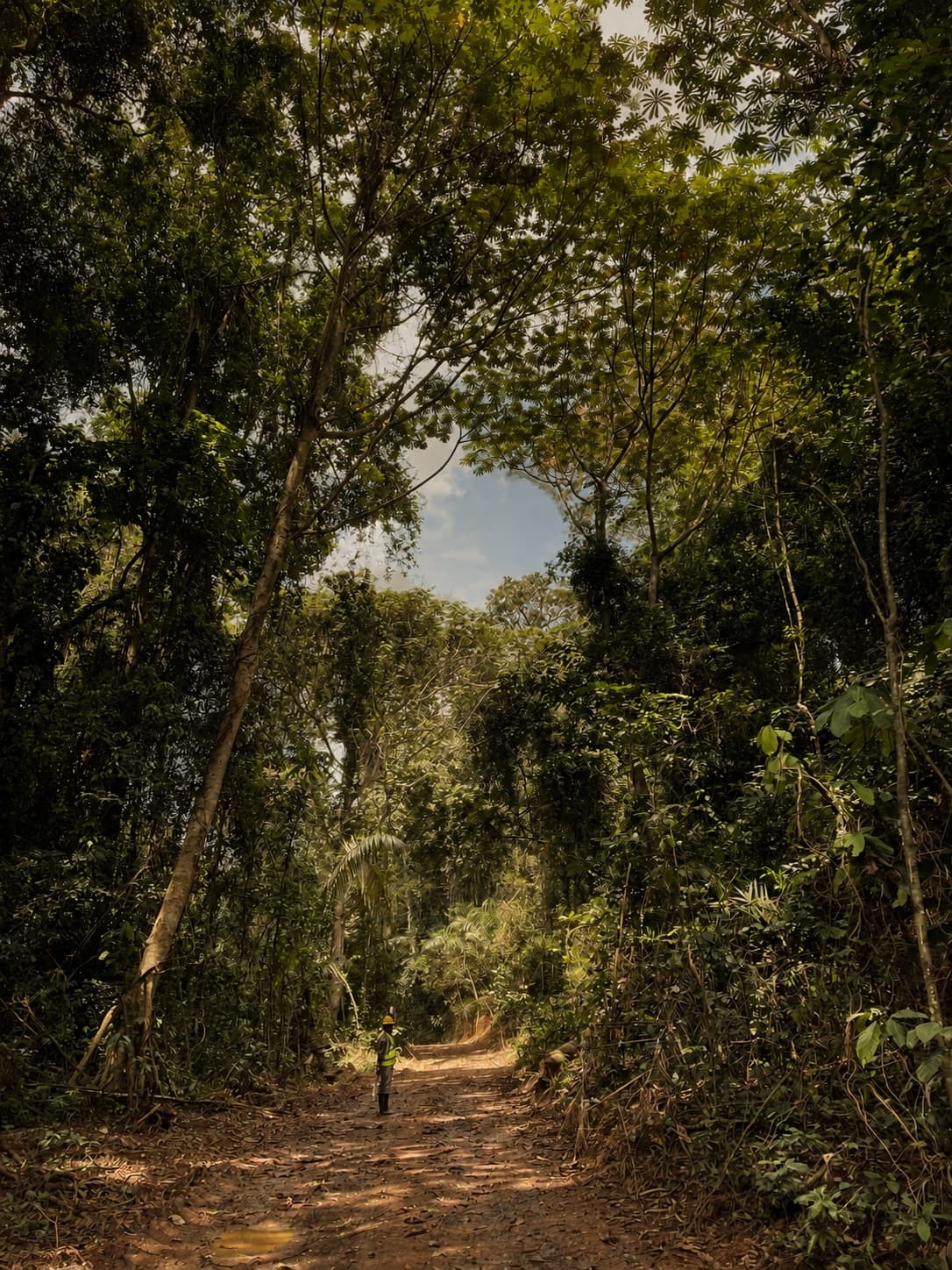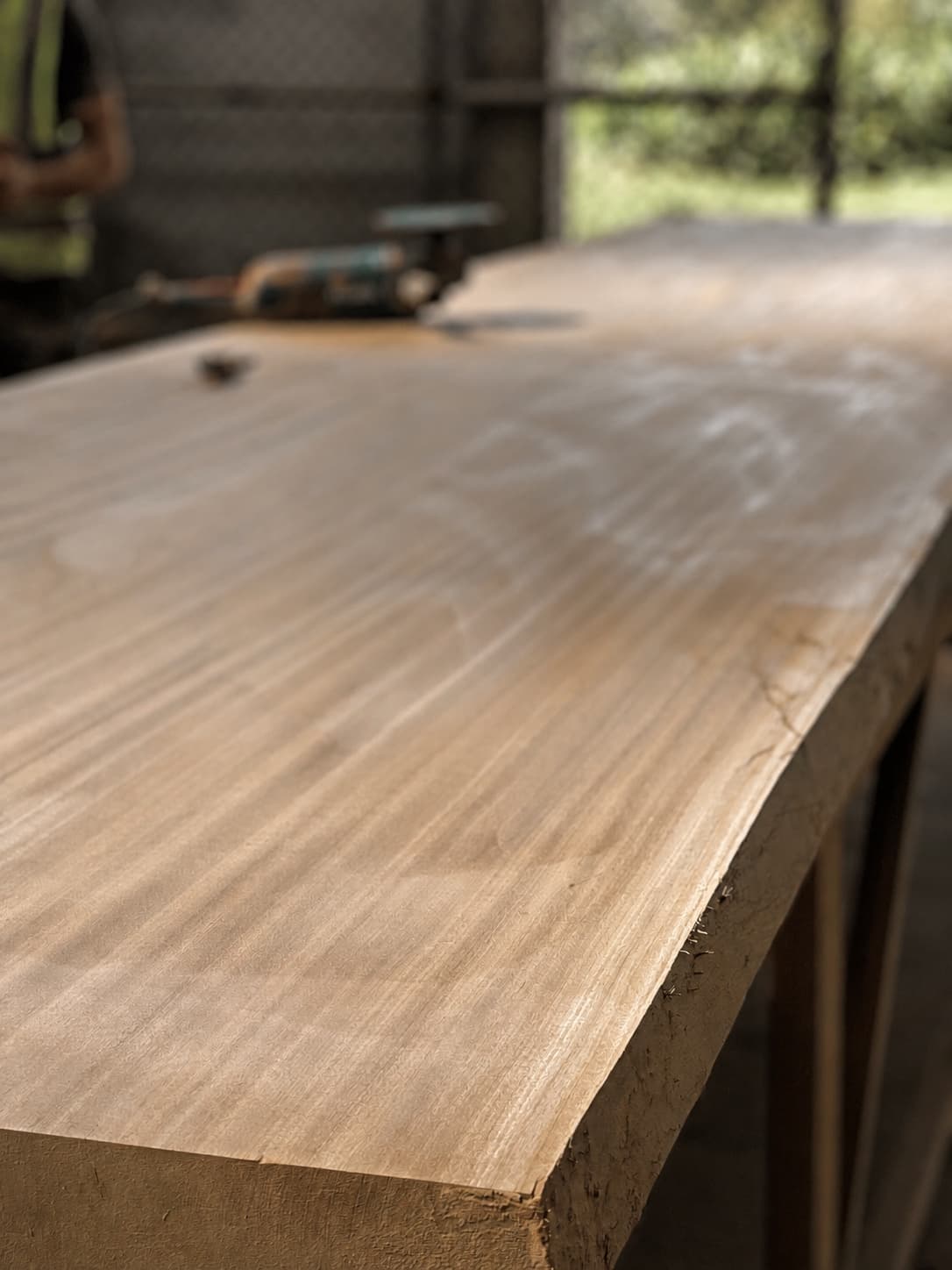
Chosen at source
We select timber close to where it grows, working with responsibly managed forests rather than buying whatever a market yard happens to have that week.

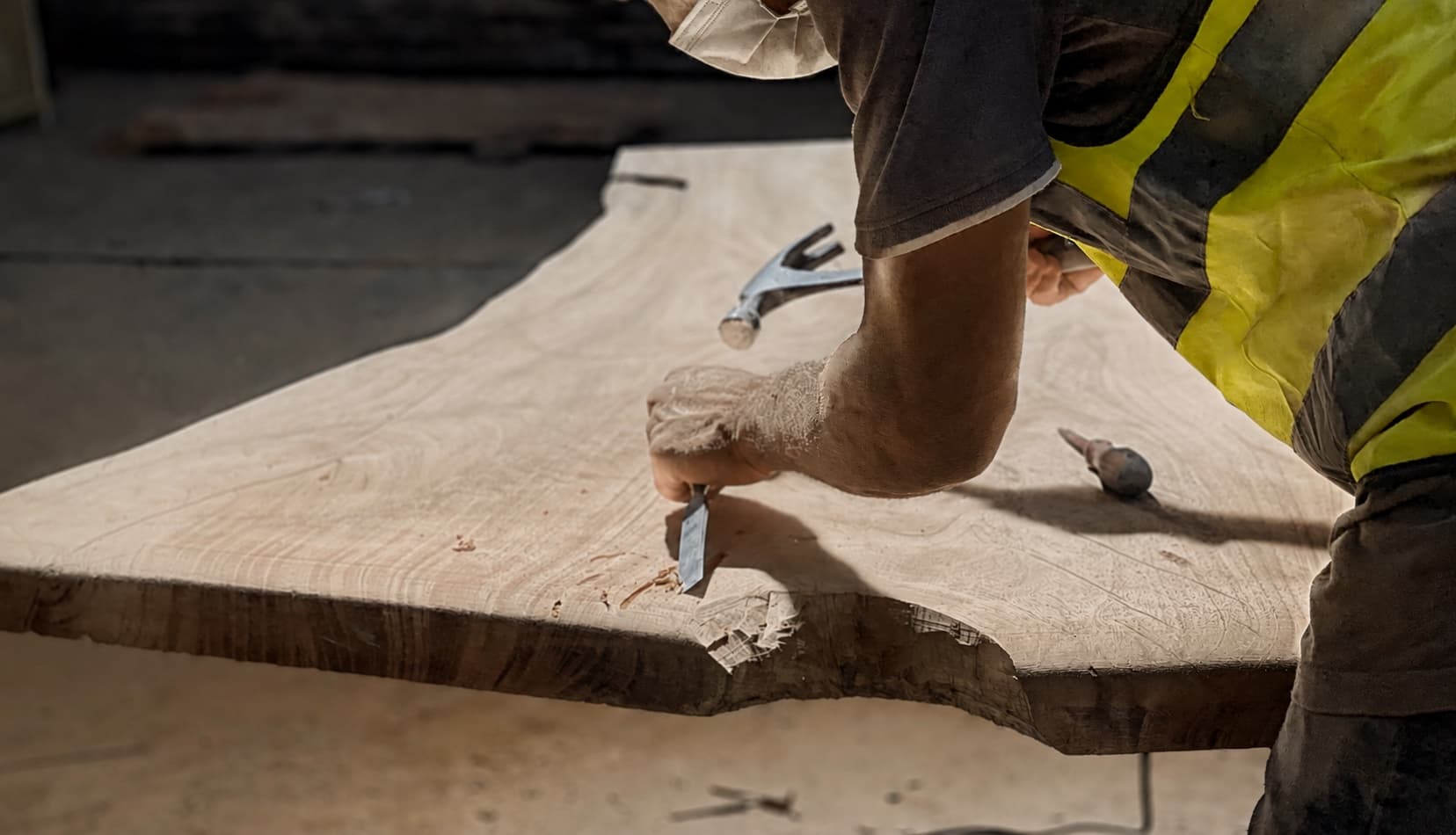
Division II — B2B · Wholesale
Kiln-dried live-edge slabs and dimensioned tropical hardwood for workshops, joiners, architects and developers across Lebanon and the Gulf. Sourced from West Africa and Europe, graded before it ships.
Sourcing and grading
We select timber close to where it grows, working with responsibly managed forests rather than buying whatever a market yard happens to have that week.
Sawn, kiln-dried and graded before shipment, with the export paperwork and grading data travelling alongside each consignment.
Full live-edge slabs for feature pieces, and dimensioned stock for joinery and fit-out work. Send us your cut list and we'll quote it.
You deal with one company from sourcing through to delivery, not a chain of brokers. Fewer gaps in the provenance, and fewer surprises when the timber arrives.
The species
A selection of the West African species we source to order. Availability shifts with the season and each consignment, so tell us what your project calls for and we'll source to suit. Tap a species for its full profile.
A pinkish-red mahogany known worldwide for its striped quarter-sawn figure.
Character
Heartwood is a pinkish-red mahogany colour with interlocked, sometimes wavy grain that gives the well-known striped face on quarter-sawn boards. Medium texture and dries fairly quickly.
Typical uses
Furniture, joinery, cabinet work, doors, boat fit-out, sliced and rotary veneer.
Working
Saws satisfactorily and finishes well; take some care when machining to avoid grain pick-up.
Enquire about Sapele →A red-brown mahogany with a strong reputation for looks and performance.
Character
Red-brown, mahogany-coloured heartwood with interlocked grain and a fairly fine texture. Stable in service and closely related to Sapele and Edinam.
Typical uses
Interior and exterior joinery, doors, window frames, furniture, flooring, veneer, boat work.
Working
Saws easily; may pick up some grain when machining and can need filling to finish.
Enquire about Utile →The heavier cousin of Sapele, with the same mahogany look.
Character
Dark mahogany red-brown heartwood with straight to interlocked grain and a medium texture. From the same family as Sapele, Utile and Edinam, but somewhat harder. Slow drying, and worth the care.
Typical uses
Furniture, joinery, fitments, doors, frames, flooring, veneer, plywood, boat work.
Working
Saws and finishes easily; machining carries some risk of grain tearing.
Enquire about Kosipo →A widely used red-brown mahogany from the Sapele family.
Character
Red-brown, mahogany-coloured heartwood, sometimes striped on quarter-sawn faces. Part of the Sapele, Kosipo and Utile group.
Typical uses
Interior and exterior joinery, cabinet making, furniture, doors, flooring, veneer, plywood, boat building.
Working
Works and dries easily and takes a good finish; gum is sometimes present.
Enquire about Edinam →The versatile red mahogany of worldwide reputation.
Character
Red-brown heartwood with pale sapwood and straight to interlocked grain. Mild and easy to work, and a genuine all-rounder.
Typical uses
Joinery, cabinet work, furniture, mouldings, doors, boat building, veneer, plywood, turnery, carving.
Working
Saws, machines and finishes easily with no real problems.
Enquire about African Mahogany →A respected commercial redwood with good durability and strength.
Character
Pink-brown, mahogany-coloured heartwood with interlocked, sometimes wavy grain and a fairly coarse texture. A slightly greasy feel is characteristic. Dries easily.
Typical uses
Exterior joinery, window frames, doors, drawer sides, boat construction, furniture, veneer, plywood.
Working
Saws and machines satisfactorily; the natural greasiness can affect glueing and finishing, so surfaces need preparation.
Enquire about Niangon →A well-known mahogany-type timber with a cedar-like scent.
Character
Mahogany red-brown heartwood with straight to interlocked grain, a medium texture and a typical cedar-like scent. Dries rapidly with very little degrade and is stable in use.
Typical uses
Cabinet work, furniture, flooring, boat construction, joinery, light structures, turnery, veneer, plywood.
Working
Machines easily and finishes to a satisfactory surface; gum can occasionally interfere with sawing and the dust is an irritant.
Enquire about Guarea →A rich red-brown redwood, durable and often finely figured.
Character
Dark red-brown heartwood with a fine, even texture, sometimes mottled or wavy. Stable and durable.
Typical uses
Decorative and structural joinery, furniture, staircases, boat construction, high-quality veneer, plywood.
Working
Finishes excellently, but high silica content noticeably blunts tools and the dust is an irritant.
Enquire about Makore →A hard-wearing mahogany-red timber, fine-grained and strong.
Character
Mahogany-red heartwood with a fine, mostly interlocked grain and high resistance to abrasion. Some figure on quarter-sawn faces, with reasonable bending qualities.
Typical uses
High-quality joinery, cabinet work, bench tops, boat components, decking, turnery, interior and exterior work.
Working
Saws, machines and finishes easily; preboring is needed before fixing.
Enquire about Danta →A durable olive-brown hardwood, long used as a teak alternative.
Character
Olive to yellow-brown heartwood with interlocked grain and a coarse texture. Dries well with little movement and stands up outdoors, which is why it is one of West Africa's most respected timbers.
Typical uses
Exterior and interior joinery, garden furniture, decking, worktops, window frames, boat work.
Working
Generally works well, though occasional stony deposits can blunt tools and the dust is an irritant.
Enquire about Odum (Iroko) →A golden-brown, teak-like timber for the finest work. Supply is limited and controlled.
Character
Golden-brown heartwood with fine, interlocked grain, very high natural durability and low movement in service. Can stain if left wet against iron.
Typical uses
Top-quality furniture and joinery, garden furniture, flooring, ship and boat work, decorative veneer.
Working
Saws at an average rate and finishes excellently; watch for grain tearing and splitting.
Enquire about Afrormosia →Plantation-grown teak, the benchmark for stability and weathering.
Character
Golden-brown heartwood, straight-grained with a slightly oily feel. A long-standing reputation for durability and dimensional stability, with some resistance to marine borers. Grown on plantations in Ghana.
Typical uses
Exterior and interior joinery, window and door frames, flooring, cabinet work, garden furniture, decking, boat building, veneer.
Working
Machines and finishes well; its abrasiveness causes noticeable tool blunting.
Enquire about Teak →Very stable, strong and durable — a first-rank timber for demanding work.
Character
Darkish red-brown heartwood with interlocked grain and a coarse texture. Exceptionally stable, drying slowly with little degrade. Some logs carry a yellow deposit that can mark textiles.
Typical uses
High-quality exterior and interior joinery, heavy construction, flooring, doors, selected furniture, boat work.
Working
Slow to saw with some blunting; finishes well, needs preboring before fixing, and the dust is an irritant.
Enquire about Papao (Afzelia) →Very high strength and durability for the hardest-working applications.
Character
Distinctive yellowish-red heartwood with coarse, strongly interlocked grain. A hard, heavy species with very high natural durability, including resistance to marine borers. Dries quickly but needs care.
Typical uses
Heavy construction, dock and marine work, bridges, piling, sleepers, mining timber, heavy-duty flooring, boat building.
Working
Very hard on saws and machines; preboring is needed before fixing.
Enquire about Denya →A golden, highly durable timber widely used for exterior work.
Character
Characteristic yellow-gold heartwood with usually interlocked grain and a medium to coarse texture, sometimes showing ribbon figure. A hard species that needs careful drying.
Typical uses
Decking, exterior structures, dock and sea-defence work, flooring, boat work, panelling.
Working
Saws, machines and fixes satisfactorily; surfaces may need filler to finish.
Enquire about Kusia →A tough outdoor timber, often used where Odum would serve.
Character
Yellowish-brown, streaky heartwood with coarse, interlocked grain. Smells when wet and fresh wood corrodes iron, so fixings need choosing carefully. For some purposes regarded as an alternative to Odum outdoors.
Typical uses
Exterior structural work, marine work, sleepers, outdoor furniture, trailer decking, wagon work.
Working
Slow sawing with pronounced blunting; some grain pick-up, filler needed to finish, preboring before fixing, and the dust is an irritant.
Enquire about Dahoma →A pale, versatile timber with good strength, often likened to oak.
Character
Pale creamy-yellow heartwood, sometimes with a darker heart. A stable, medium-weight wood that dries quickly and can be compared with oak.
Typical uses
Joinery, trim, mouldings, light structures, window frames, furniture, flooring, veneer, plywood.
Working
Saws and finishes easily; may pick up a little grain when machining.
Enquire about Emeri →A pale, light general-purpose timber for veneer and interior work.
Character
Pale yellowish-white wood, sometimes streaked with black, with straight to interlocked grain. Plentiful and best kept for interior use.
Typical uses
Rotary veneer, plywood, blockboard, interior joinery, panelling, mouldings, selected furniture.
Working
Easy to saw and machine; may need filling to finish.
Enquire about Ofram →Ghana's most abundant commercial timber. Light, pale and easy to work.
Character
Creamy-white wood with interlocked grain and a medium texture. Soft and light, so not for load-bearing, but easy to work and widely available. Best used indoors.
Typical uses
Veneer, plywood, blockboard, interior mouldings and trim, utility furniture, sauna linings, woodware.
Working
Saws, machines and finishes easily, though it holds nails poorly.
Enquire about Wawa (Obeche) →Species properties referenced from the Ghana Forestry Commission, The Tropical Timbers of Ghana. Colour, grain and figure vary naturally between logs and parcels.
Who it serves
Tell us the volumes, species and moisture targets you need. Start with whatever you have.
Enquire about timber